

Your eyes go through a lot. Between screens, long days, and seasonal allergies, a little rest is all they need most of the time. Knowing the difference between a minor irritation and a true eye emergency can protect your vision when it matters most. Our team at Insight Vision Care Optometry is here to help you tell the difference and to be there when you need care fast.
Certain eye symptoms, like sudden vision loss, flashes of light, or pain after an injury, can be signs of an eye emergency that need prompt attention from an eye doctor. Here’s what to watch for and what to do if you notice any of these signs.
When Eye Pain Becomes a Red Flag
A little eye strain at the end of a long day can be normal. But sharp, persistent, or worsening pain is not. If the discomfort doesn’t ease up after some rest, that’s your first signal that something more serious may be going on.
Pain that follows a bump, poke, or impact to the eye needs to be checked, even if your vision seems fine right after, because internal damage isn’t always visible from the outside. Pain that accompanies any sudden changes in your vision is especially urgent and shouldn’t be ignored.
Sudden Vision Changes and What They Mean
Vision Loss and Double Vision
If part of your vision suddenly goes dark, blurry, or disappears (even briefly), that’s not something to push through. Sudden vision changes can point to pressure changes in the eye, circulation issues, or problems with the retina (the light-sensitive tissue at the back of your eye), all of which require prompt medical evaluation.
Seeing double out of nowhere is another sign worth taking seriously. Double vision that comes on suddenly, especially in just one eye, can signal a problem affecting the eye itself or the muscles and nerves involved in vision and should be evaluated promptly.
Flashes of Light and Floaters
Floaters, those tiny drifting specks most people notice from time to time, are usually harmless. But a sudden flood of new floaters, especially paired with flashes of light, is a different story. That combination can point to a retinal tear or detachment, which is an eye emergency.
Think of it like a small crack forming in something that holds everything together. The sooner a retinal issue is caught, the better the treatment options. If you notice a sudden curtain or shadow creeping across your field of vision, don’t wait: Get seen by an eye care professional that day.
Eye Redness, Discharge, and Other Visible Signs
When Redness Needs Attention
Pink, irritated eyes are common, especially during allergy season. But redness that sticks around for more than a week without improvement is worth a closer look, because your eye might be telling you it’s not getting better on its own.
Redness that comes with pain, light sensitivity, or a feeling like something’s stuck in your eye needs attention sooner. These signs together can indicate an infection or inflammation that may require treatment to resolve properly.
Blood or Fluid in the Eye
Visible blood in the white of your eye, like a bright red patch, can look alarming, and it often is harmless. But if it follows an injury or comes with pain and vision changes, it needs to be evaluated. When in doubt, it’s best to consult your eye doctor.
Fluid leaking from an injured eye is always an emergency. Cover the eye loosely, being careful not to apply pressure, and see an eye doctor right away. Pressing on an injured eye can make the situation worse.
Foreign Objects and Chemical Exposure
Something Stuck in Your Eye
If something flies into your eye and doesn’t flush out, resist the urge to rub or dig at it, as rubbing can push the object deeper into the eye or scratch the eye’s surface. Blinking and letting tears do their job is a safer first move.
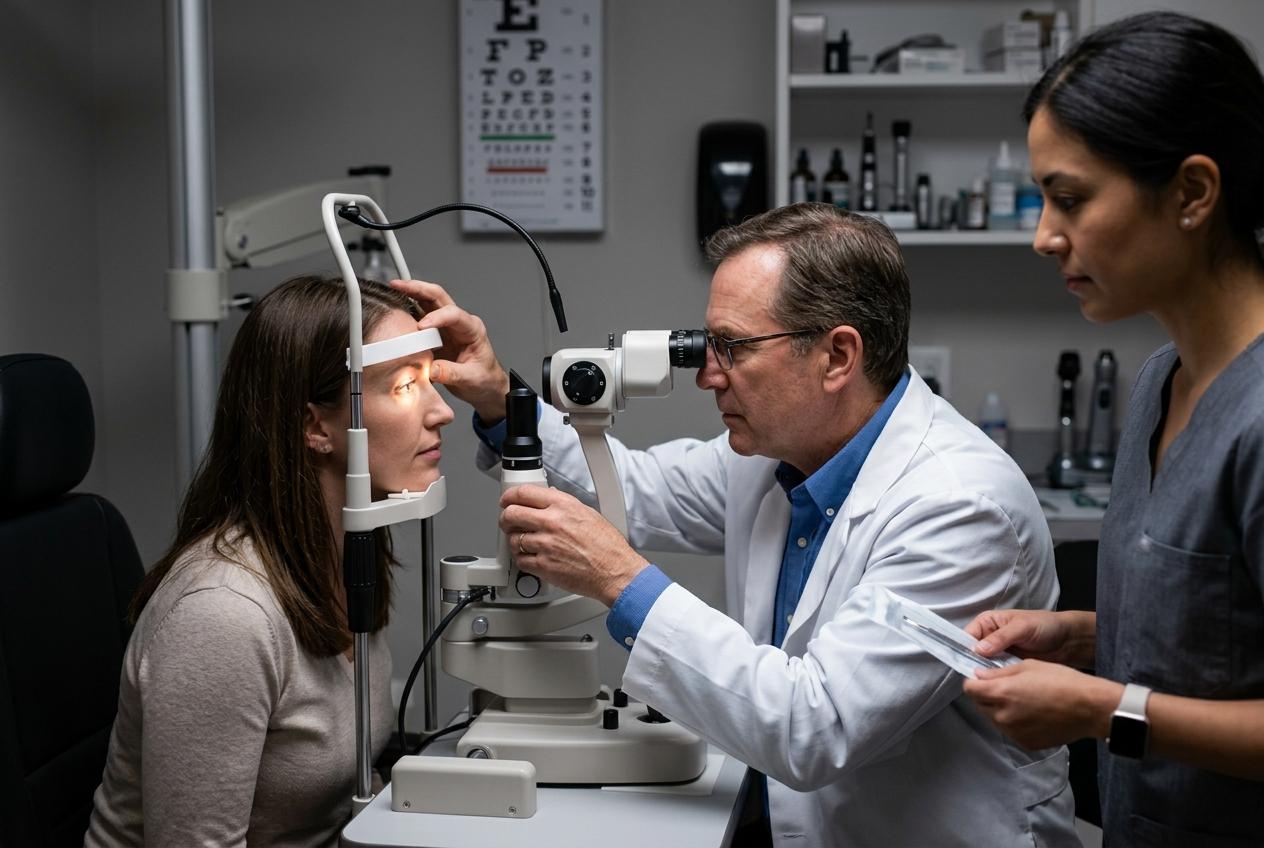
If the object is still there after trying to let your tears work, then you will need to see your eye doctor right away. Metal, glass, or anything sharp stuck in the eye is an emergency, no matter how small it seems.
Chemical Contact with the Eye
If a chemical splashes into your eye, the first step is to flush it immediately. Hold your eye open under clean, gently running water for at least 20 minutes, even if it starts to feel better sooner. Time spent rinsing is time well spent.
After flushing, seek care even if your eye feels okay. Some chemicals can cause damage that shows up hours later. Bringing the product label or knowing the chemical name can help the eye doctor understand what your eye was exposed to so that they can begin to help.
What to Do Before You Reach an Eye Doctor
The most important thing you can do in an eye emergency is stay calm and keep your hands away from your eye. Rubbing, pressing, or trying to fix things yourself can turn a manageable situation into a more serious one. Give your eye some space while you figure out next steps.
Some situations (like a chemical burn or a penetrating injury to the eye) belong in the emergency room. Others, like a sudden rush of floaters or persistent redness with pain, require a visit to your eye doctor for proper evaluation. When you’re not sure which way to go, a quick phone call can help point you in the right direction. Here’s a simple breakdown:
- Go to the ER for chemical exposure, a punctured eye, or severe trauma.
- Contact an eye doctor for sudden vision changes, flashes, new floaters, pain with redness, abrasions, or if a foreign object is stuck in your eye.
- When in doubt, call first. A quick answer can make a real difference.
If you can’t reach an eye doctor, seek emergency medical care.
Call Our Team for More Answers
Our team at Insight Vision Care Optometry is here to help when you’re not sure what to do next. Your eyes matter, and so does getting the right care at the right time. Reach out to us or book a visit to come see us when you need prompt eye care services.